
From India to Ečka: two cadets on what it takes to train for an airline career in Serbia
Jochim and Adi were both 22, both from the south of India. One from Kerala, the other from Hyderabad and…
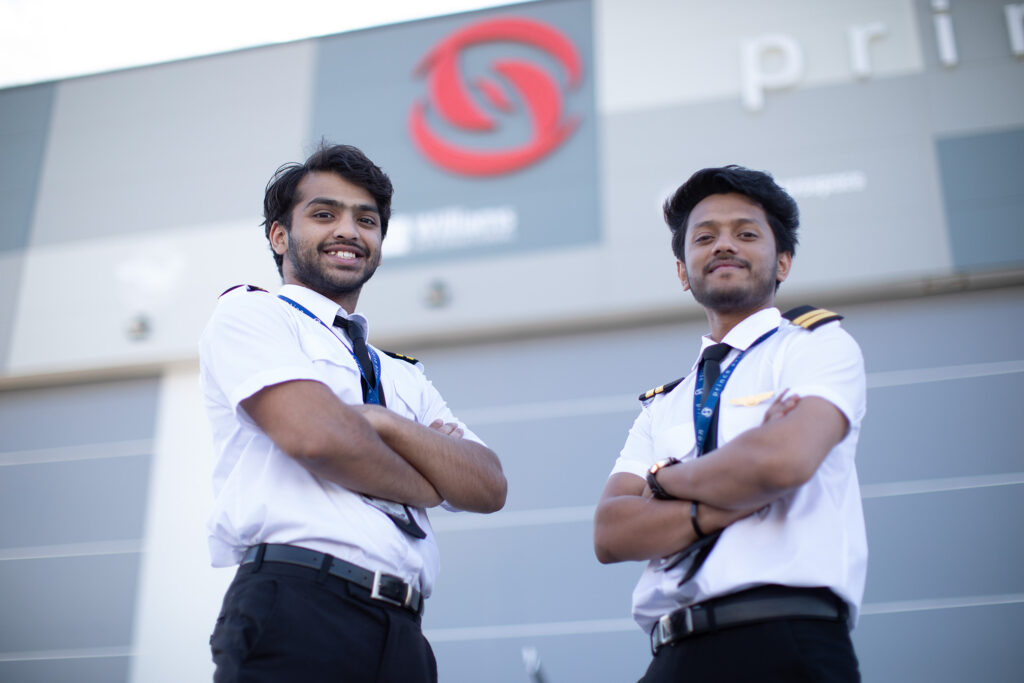
Jochim and Adi were both 22, both from the south of India. One from Kerala, the other from Hyderabad and both have finished commercial pilot training at Prince Aviation’s ATO – in Serbia.
They arrived in January 2023 with no flying experience at all. Two years and ten months later, each holds a CPL with a frozen ATPL, an instrument rating and a multi-engine rating, issued by the Serbian CAA.
Their route into aviation was different in one respect. Jochim, who grew up in Dubai, completed ground school in India before starting flight training in Serbia. Adi came straight out of high school. “This was a dream since childhood, since I was three,” he says. “This coming true means a lot.”
Arriving in a country you have never heard much about
For both, Serbia was an unknown. Neither had travelled outside India before, apart from Jochim’s connection to the Gulf, and the practical side of landing in a new country was handled by Prince Aviation from day one.
“The whole idea of Serbia itself was new to us,” Jochim recalls. “When we came here, Prince was very welcoming. I still remember the first few days, Tamara Knežević, Prince Aviation ATO head, was driving us around. Even to get an adapter, she took us to a mall. We never felt lost.”
Jochim spent his first six months in Belgrade before moving to Zrenjanin, close to the Ečka airfield where the flying is done. He describes the move as a cultural shock that did not last long. “After a few months I got really comfortable there, mostly because the people are very welcoming.” Adi’s summary is shorter: “Even if you have a small problem, everyone gets together and solves it.”
Both had time to see the country outside the training schedule: Tara National Park, Novi Sad, Sombor, Belgrade, and trips to the south.
The theory, and the part nobody puts on Instagram
ATPL theory was delivered first as an online course, with instructors available at the school for follow-up questions. When Jochim was in Dubai and struggling with meteorology, a Zoom session was organised with the instructor, to clear it up.
“I knew it would be tough, so I was mentally prepared,” he says. “With ATPL, the number of questions didn’t really click at first. But once you go step by step, you get through it.”
The Serbian CAA examinations were, in Adi’s words, the hardest single part of the process. Not because of the administration, which the school handled, but because of the volume of study. “Not tough, but challenging. You need to spend hours and hours on this.”
The flying delivered its own reality check. “I was thinking it was really glamorous, like what you see on social media,” Adi says. “Then you enter the cockpit and you feel the heat and the movement, and you think, okay, this is not the same as Instagram.”
First solo, UPRT and Belgrade
Neither cadet was told in advance when his first solo would happen, the standard approach. Both flew theirs at between 11 and 16 hours of flight time.
“We were just doing normal patterns and then suddenly the instructor says, okay, stop, you can go on your own,” Jochim says. Adi’s description of the flight: “It felt like we had wings that day.”
Upset prevention and recovery training, flown on the Cessna 172 and including spin recovery, was the part both single out as the most interesting. “We never expected the aircraft would behave that way,” Adi says. “It was interesting to see that you can enter something really serious and recover from it.”
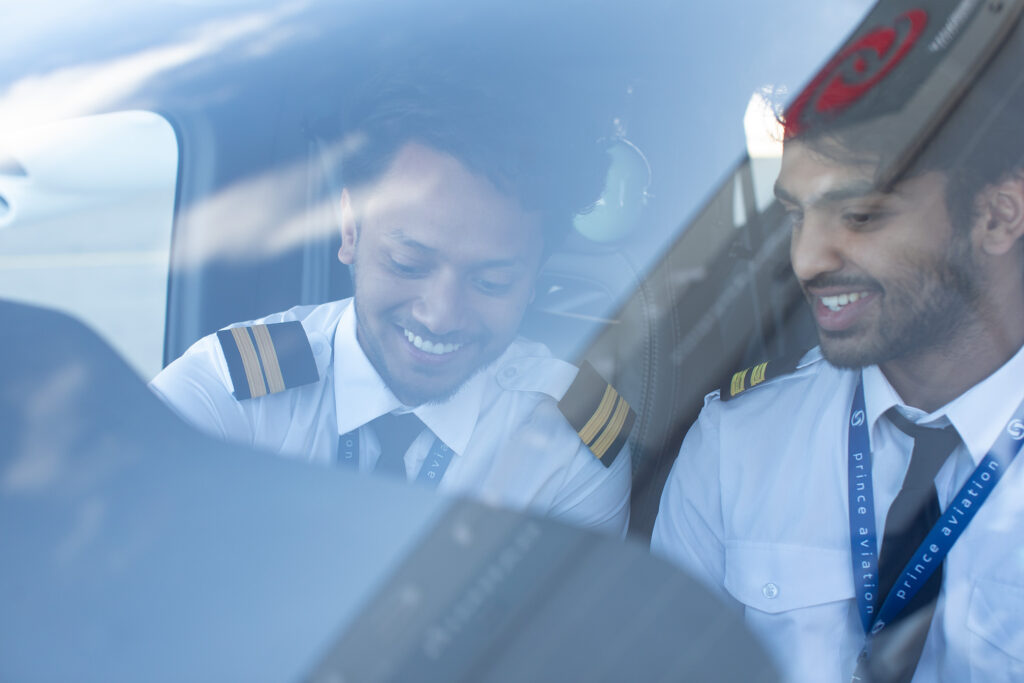
The training also includes flights from Belgrade Nikola Tesla Airport, a full international airport a short distance from the training base, and a 300 NM cross-country to the south of the country.
Both proved instructive for different reasons. “The first day I was really nervous because of the calls,” Adi says. “We were used to Ečka, and now everyone is interrupting you, you cannot say something, and you are listening to your instructor and learning at the same time. Then we got used to it.”
Navigation south of the Sava and the Danube, over less distinctive terrain, was the other challenge, flown with paper charts on board, as required, alongside the electronic flight bag.
Everything under one roof
The clearest contrast the two cadets draw with training in India is not about instruction quality but about timelines. Ground school in India is widely available; the practical side is where the issues start.
“There are so many students there,” Jochim explains. “Let’s say we need an approval. The aerodrome entry permit we got here three days after we landed, in India it would take at least one month. And while you wait, something else lapses. Your medical lapses, and now you have to do the medical again.”
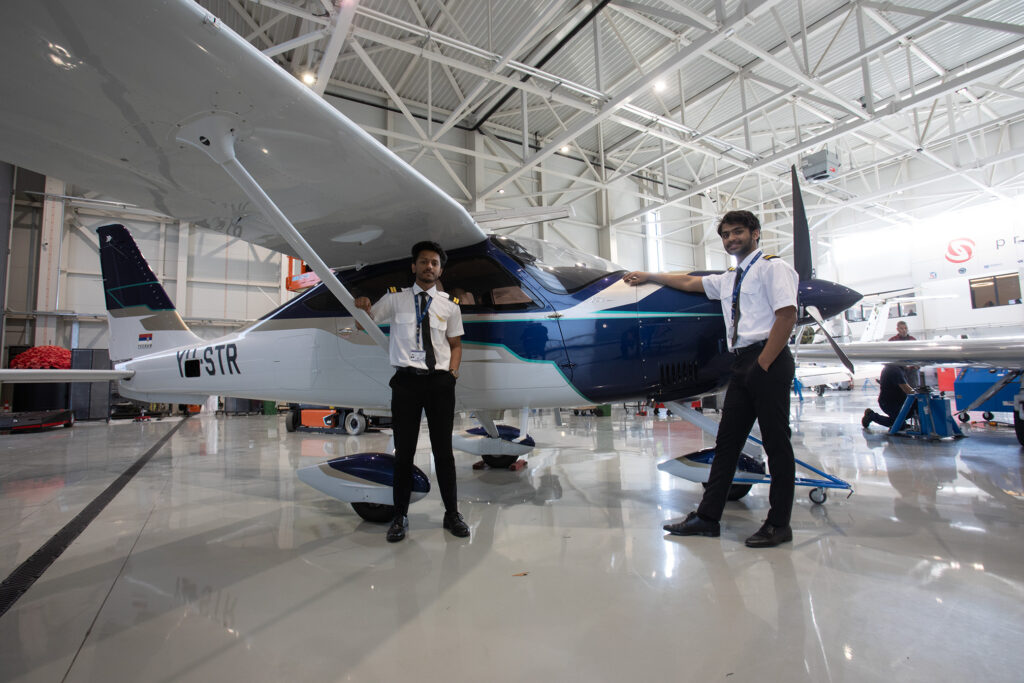
At Prince Aviation, the administrative work with the Serbian CAA is prepared in parallel with training progress, so paperwork is ready as each stage is reached. The company’s own maintenance organization is on the same site as the flight school, which removes the second common source of delay: aircraft availability. The company also has Indian instructors on staff and carries out MRO work for Indian business jet customers.
Converting the licence, and the waiting game at home
The license issued in Serbia is an ICAO-compliant national license. For India, conversion means a Class 1 medical, three DGCA examinations at CPL level: meteorology, navigation and air regulations, an RTR (radio telephony) license, and two to three flight checks, including a night route and an IFR check.
Other jurisdictions differ; the FAA route is considerably more demanding, while some countries accept the license with minimal additional requirements.
Neither cadet has illusions about the Indian market. Adi describes a friend who trained in the United States and was hired within six months, in an IndiGo intake of a few hundred pilots, out of roughly 2,000 applicants. “There are openings, but there are pilots as well. There is no lack of pilots, whatever you see on the internet. Airlines are choosy.”
Both have now returned to India and are working on applying to airlines and converting their Serbian CAA license.
The advice from the school side is to treat every airline assessment as useful, including the ones for airlines a candidate is uneasy about. “You need that confidence when you see that many people coming for the same thing, with the same licenses and the same ratings,” says Tamara Knežević. “You have the license in your pocket now. What you need next is patience.”
LATEST NEWS:
European MRO companies complete Cessna Citation XLS practical training at Prince Aviation
Prince Aviation has completed a practical Part 147 type training course for the Cessna 560 XL/XLS (Pratt &…
Prince Aviation hosts live demonstration of Gogo Galileo HDX in-flight connectivity in Belgrade
Six months after becoming an authorized Gogo dealer, Prince Aviation gave Southeast European business aircraft operators a hands-on…